


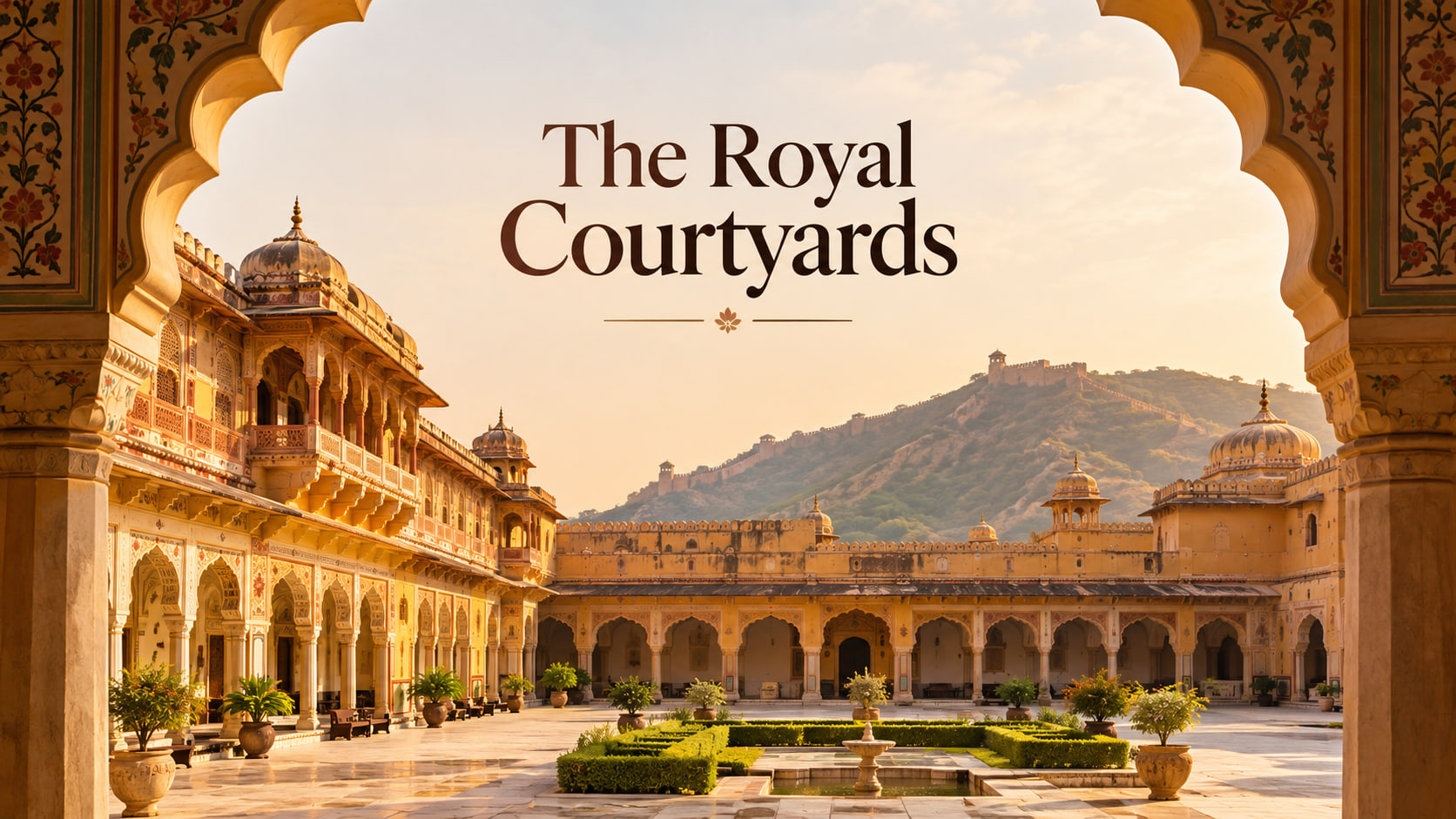
The Royal Courtyards
My recent visit to the Amer fort in Jaipur gave me a vivid glimpse into what life or a typical day in the Royal household looked like. Closing my eyes, I transported myself back and picked the year 1630. It was the reign of Mirza Raja Jai Singh I. Taking creative liberties, I reconstructed the entire scene at the fort. The military was practicing intense drills and the very air within the palace walls was rife with talks of the upcoming campaign to the city of Bir, a strategic outpost in the region of Marathwada.
Moving away from the intensity of the warriors, I turned towards the living rooms. I took in everything from the Diwan-i-Khas to the King’s chambers, the special baths built for the Queen and a view of her exclusive residence - a trickling stream of maids saw to her needs and that of the other princesses as well. Preparations for the upcoming festival of Teej (to honour the Goddess Parvati) were also underway.
Standing in the Royal Courtyard I could see the hustle and bustle of maids coming in and out of the Queen’s chambers. I imagine they were in a hurry to get her regalia approved or altered according to her desires. On festive days, a special palanquin carried the Queen around the
fort. It is believed that her garments were so rich with jewels sewn into the fabric that the weight of
them was too heavy for her to walk in! And added to that was the weight of the jewelry she adorned - emeralds, diamonds and rubies set in gold accentuated with delicate Meenakari in colours to match the Royal attire.
One can imagine the feasts on such festivals, and more importantly, the individual chosen to organise these occasions. The station must come with heavy responsibilities. My imagination fired up the mud stove in the Royal kitchen. The size of those vessels! The kitchen entourages slaving over delicacies to be presented in serveware of gold and silver. I could see the care taken by the attendants in selecting fine linen. Silk and Velvet place mats under the large thaals (plates) and heavily embroidered tray covers over huge silver trays to serve the dishes. The dishes were all covered by exquisite wraps to prevent anything falling into the dish by mistake. A string of servers parading from the kitchen, across the courtyard and onto the dining halls. Each bearer was accompanied by a man holding an umbrella over him or her - it was to protect the bearer and their precious cargo from the elements. Now that’s what I call Grandeur!
Within the dining space were regal cushions set upon silk carpets. Each place setting had delicately embroidered fine linen napkins to wipe food stains. Everything felt surreal yet suiting the plush lifestyle of a Royal household. Thus began the trend of elegant and grand, luxury home linen.
It was never a question of show but rather of feel - the way they felt is the way they lived. Anything
occupying the personal space of Royalty, seen or unseen, was swaddled in grandeur. Exquisite pieces embroidered, carved, woven and handcrafted by the most skilled craftsmen. These traditions percolated down to nobility and to other more financially favoured classes of society. A talented and experienced craftsman always found a job at the court, for there was an enduring thirst to collect and curate the best of everything - be it intricately carved furniture, fine shimmers of silk or exclusive pieces of Art.
This here is the inspiration behind Pomegranate ‘n’ Lime - to bring back rich cultures which
believed in the grandeur of handmade articles, laboured over hours and days. Producing beautiful
pieces for everyday use that clearly qualified as Art. The appreciation which followed when such pieces were sought after at a fair price emanated in the pride of the artist - alas a diminishing experience today, reflected starkly by the shriveled-up numbers of such craftsmen.
The process of reviving the handmade and handcrafted jewels from the bygone era is actually akin to reviving forgotten Art forms. We hope to again breathe life into our collective Heritage - both Eastern and Western. With the unapologetic age of AI gate-crashing into everyday life and humanity treading into uncharted waters, a cultural revival is exactly what people need. An era where human craft is the hero. Grasping firmly onto our cultural past might just become the balance we need to steer ourselves steady in today’s world.
After all, the very act of remembering one’s heritage is a way of paying homage to our ancestors, in turn earning their wisdom to carve out steadier paths for ourselves to walk on. So go on, Gift a piece of familiar Heritage to yourself while entering the unfamiliar and unavoidable world of AI.